A raise feels like good news the day it lands. Whether it is good news depends on one other number: how much prices went up over the same year. If prices rose faster than your pay, you got a raise on paper and a pay cut in the shops.
How do you check if a raise beats inflation?
Take your raise and the inflation rate for the same year, then work out (1 + raise) ÷ (1 + inflation) − 1. That's your real raise: the change in what your pay can buy. A positive number means you're ahead. A negative one means you're behind, even though the figure on your payslip went up.
You can also do it in dollars. Multiply your old salary by (1 + inflation). That's your break-even salary, the pay you need just to buy the same things as last year. Anything above it is a real gain.
Are U.S. raises beating inflation right now?
The Bureau of Labor Statistics publishes both halves of the check every month. Average hourly earnings for private-sector workers were $37.76 in August 2026 (preliminary), up from $36.62 a year earlier: +3.1%. Over the same twelve months the Consumer Price Index rose +3.4%.
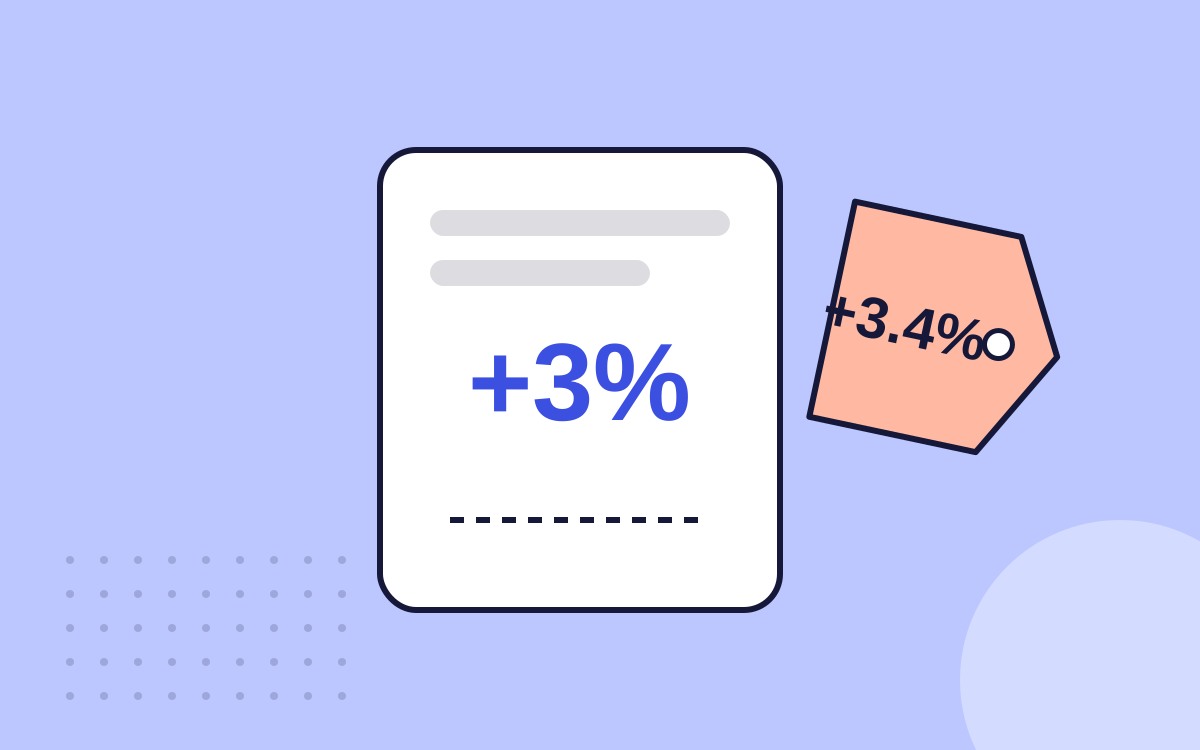
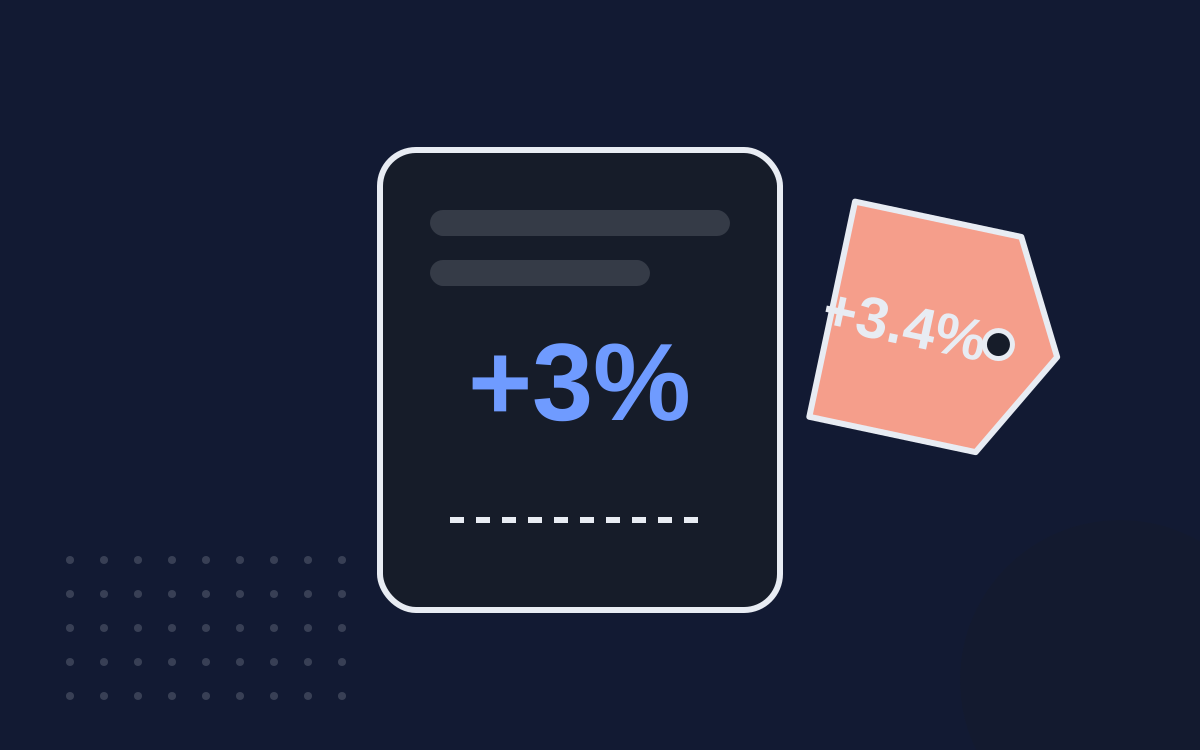
Put through the formula, the average paycheck bought −0.27% less than a year before. That's an average across millions of workers, and your own raise may be very different. It's a useful reminder that a 3% raise in a year of 3.4% inflation is not a step forward.
A worked example on $52,000
Say you earn $52,000 and inflation for the year is 3.4%. Your break-even salary is $53,766. Here is how four different raises compare:
| Raise | New salary | Real change | vs. break-even, per year | per month |
|---|---|---|---|---|
| 2% | $53,040 | −1.4% | −$726 | −$61 |
| 3% | $53,560 | −0.4% | −$206 | −$17 |
| 4% | $54,080 | +0.6% | +$314 | +$26 |
| 5% | $54,600 | +1.6% | +$834 | +$69 |
A 3% raise leaves you $206 a year short of keeping up. You need a raise above 3.4% before any of it counts as a gain, and a 5% raise puts you $834 ahead.
Which inflation number should you use?
The figure in the news is usually the CPI-U, the Consumer Price Index for all urban consumers. It's the right default for this check because it covers most of the population and comes out every month, so you can always line it up with the date of your raise.
Prices don't rise at the same speed everywhere. The BLS also publishes the CPI for four regions of the country and for a number of large metro areas. If you live in one of those areas, run the check a second time with the local number. It's a fairer comparison, and if local prices rose faster than the national figure, it's a stronger point to make at a review.
Your own inflation rate
The CPI tracks the price of an average basket of goods and services. Your basket may look quite different. Someone who rents, drives to work and pays for childcare can see costs rise faster than the index; someone who owns a home outright and works remotely may see them rise more slowly.
A quick way to estimate yours: take your three biggest monthly costs, compare what you paid for each in the last three months with the same three months a year ago, and see whether the total moved faster or slower than the CPI. You don't need to be exact. You only need to know whether the official figure flatters or understates what happened to you.
Can a raise push you into a higher tax bracket?
Your raise is taxed at your marginal rate, the rate on your last dollars of income, which is higher than the average rate on your whole salary. So your take-home pay usually grows by a slightly smaller percentage than your gross pay. That's normal and it's not a reason to turn a raise down.
A common worry is that a raise can push you into a higher bracket and leave you with less. For federal income tax that can't happen: only the dollars above the bracket line are taxed at the higher rate. Run the inflation check on gross pay, since that's the number both you and your employer can see. To see where a raise actually lands in your take-home pay, our guide to reading your pay stub walks through each line.
What to do with the answer
- If you're behind: you have a concrete, polite number to bring to your next pay review. "Prices rose 3.4% last year; a raise of 3% means my pay buys less than before" is a fact, not a complaint.
- If you're just level: look at what your job market pays. People who changed jobs have recently seen faster pay growth than people who stayed (see our guide on job switchers vs. stayers).
- If you're ahead: decide where the real gain goes before your spending decides for you. Even half of it, moved to savings automatically, adds up.
How do you bring it up at a pay review?
- Lead with the facts, not the feeling. "My pay went up 3% this year. Prices rose 3.4% over the same months, so in real terms my pay went down."
- Add what you delivered. One or two specific results from the past year carry more weight than a list of duties.
- Name the number you're asking for. Your break-even salary is the floor; a real raise is above it. The same ask-and-wait approach from our salary negotiation guide works here too.
- If the answer is "not now", ask "when and what?" A date and a goal you both agree on, written in an email, is something you can come back to.
Assumptions: a $52,000 salary and 3.4% inflation, the CPI-U change from August 2025 to August 2026. National averages are background only; your own costs may rise faster or slower than the CPI.
Common questions
Is a cost-of-living adjustment the same as a raise?
Not really. A cost-of-living adjustment (COLA) is meant to keep your pay level with prices. It only becomes a real raise if it's larger than inflation over the same period.
Should I use last year's inflation or a forecast?
Use the 12 months that match your raise, for example the CPI change from your last pay change to now. Forecasts are guesses; the published CPI is a measured number your employer can check.
Does a raise ever lower my take-home pay because of a higher tax bracket?
Not for federal income tax. Only the dollars above a bracket line are taxed at the higher rate, so a raise always leaves you with more after federal income tax. It can affect means-tested benefits, which work differently.
What if my employer says the budget is fixed?
Ask what it would take to reach a higher number and when. Agree on specific goals and a date for the next review, and get it in writing.
Sources
- BLS, Average hourly earnings of all employees, total private (CES0500000003) data.bls.gov
- BLS, Consumer Price Index for All Urban Consumers (CUUR0000SA0) data.bls.gov
- BLS, Consumer Price Index: regional and metro area data bls.gov
This article is general education, not personal financial advice. Figures in worked examples are calculated from the assumptions stated with them and are not forecasts.
Get the next guide by email
The Payday Note every Thursday, plus the free Raise Kit.