Your starting salary is the base every future raise is a percentage of. That makes it the cheapest point in a job to add money: one conversation before you sign, instead of years of trying to catch up.
Why does a small difference in starting salary grow?
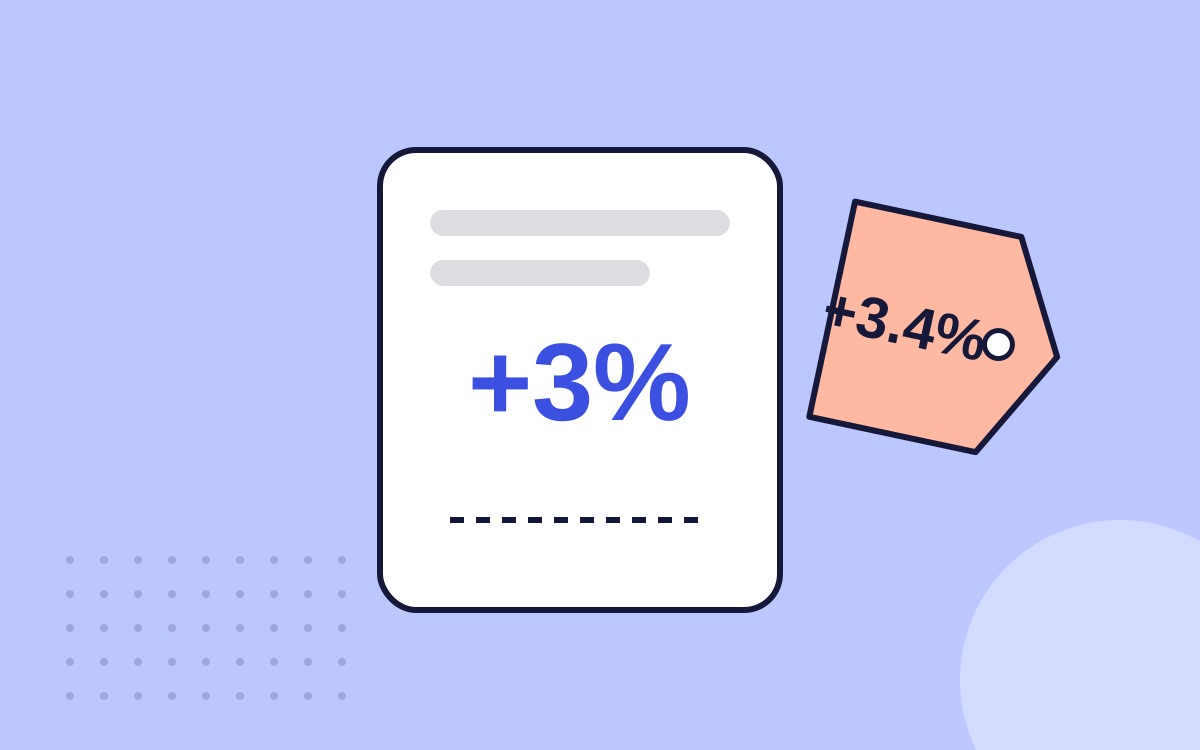
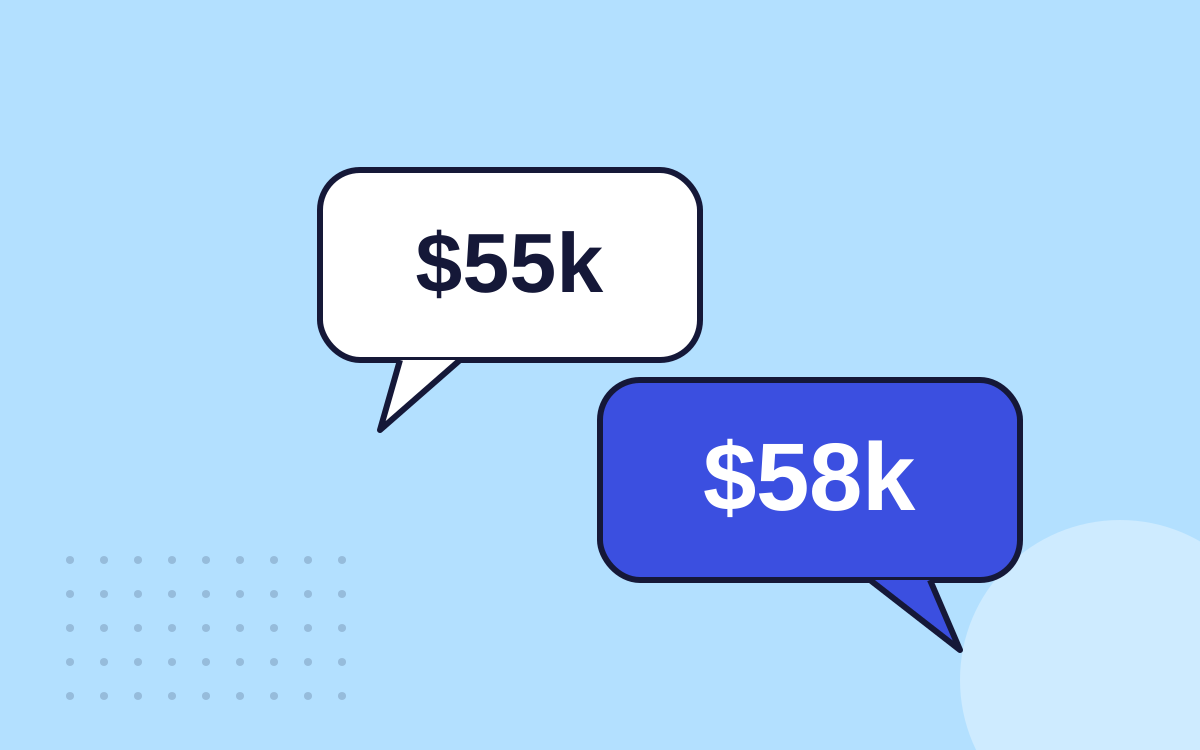
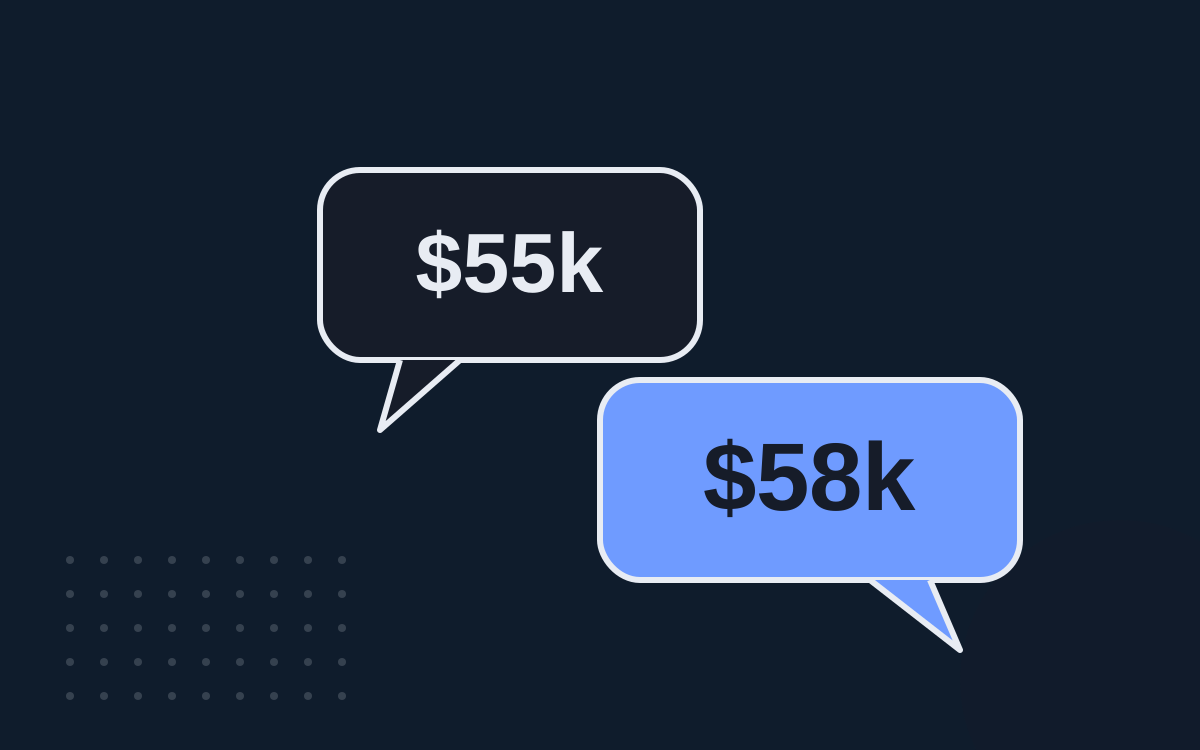
Take two offers for the same job: $55,000 and $58,000. Give both the same 3.6% raise every year (the recent median pay growth for people who stay in their job, from the Atlanta Fed). The $3,000 gap never closes. It grows with every raise:
| Start at $55,000 | Start at $58,000 | Difference | |
|---|---|---|---|
| Salary after 1 year | $56,980 | $60,088 | +$3,108 |
| Salary after 5 years | $65,639 | $69,219 | +$3,580 |
| Salary after 10 years | $78,336 | $82,609 | +$4,273 |
Over 10 years the higher start adds $35,357 in pay, and that's before any retirement match calculated as a percentage of salary. It also tends to set the anchor for your next offer, since many employers ask what you earn now. The same compounding is behind the pay gap between job switchers and stayers.
Prepare with real numbers
- Look up the pay range for the role. The BLS Occupational Employment and Wage Statistics program publishes wages by occupation and by metro area, including the middle and upper ranges. Many job ads now list a range too.
- Write down what you bring. Certifications, specific results, languages, tools you already know. Each one is a reason to sit higher in the range.
- Know your walk-away number. Use the true hourly wage method on the full offer, commute included, so you know which number actually works for you.
How do you ask for a higher starting salary?
- Thank them and show interest first. "I'm excited about this role and want to make it work."
- Name a number, not a feeling. "Based on the range for this role in [city] and my experience with [specific thing], I was hoping for $58,000."
- Then stop talking. Let them answer.
- If salary is fixed, ask about the rest: a sign-on bonus, an earlier pay review, extra paid time off, remote days, or training paid for by the employer.
- Get the final offer in writing before you resign anywhere else.
Finding the range for your role
Pay ranges are easier to find than they used to be. Several states and cities now require employers to include a pay range in job ads, so similar postings from other employers are a good first check. The BLS Occupational Employment and Wage Statistics program goes further: for each occupation it publishes wages at the 10th, 25th, 50th, 75th and 90th percentiles, nationally and for metro areas. If you have more experience than a typical new hire, the 75th percentile for your area is a reasonable place to aim.
Negotiate the package, not only the salary
Benefits made up 30.0% of private employers' compensation costs in June 2026, according to the BLS. That makes them worth asking about:
- Retirement match: how much, and how long before it's yours.
- Health insurance: the monthly premium you'd pay and the deductible.
- Paid time off and whether there's room to start with more.
- Remote days, which can lift your true hourly wage without costing the employer much.
- Employee or contractor: if the offer is a 1099 contract, ask for a higher rate to cover self-employment tax and unpaid time off; our W-2 vs. 1099 guide shows how much.
Mistakes that cost money
- Accepting on the spot. "Thank you, can I come back to you by Friday?" is a normal answer.
- Negotiating against yourself. Once you've named a number, wait for their reply instead of lowering it.
- Inventing a competing offer. It's easy to check and hard to take back.
- Forgetting the start date and review date. A promised pay review at six months only counts if it's in the offer letter.
When should you negotiate salary?
The best moment is after you have a written offer and before you accept it. At that point the employer has chosen you and has already invested time in hiring; changing the number is cheaper for them than starting again. Raising salary in the first interview, before they know what you can do, usually works against you. If a recruiter asks early what you expect, it's fine to say you'd like to learn more about the role first, or to give a researched range rather than a single number.
What to say when they push back
- "That's above our budget." "I understand. Is there flexibility elsewhere, like a sign-on bonus or a pay review at six months?"
- "Everyone at this level starts at the same salary." "Could I start at a higher step within the level, given my experience with [specific thing]?"
- "We need an answer today." "I'm keen to say yes. I'd like until tomorrow morning to look at the full package." A good employer rarely refuses one day.
- "What are you earning now?" "I'd rather focus on the range for this role. Based on my research it's around [low] to [high] for this area."
Each answer keeps the conversation friendly and moves it toward something concrete. You don't need to win every point; one improvement, written into the offer, is a good result.
Assumptions: offers of $55,000 and $58,000, the same 3.6% raise every year for both, no job changes, bonuses or promotions.
Common questions
Can an employer withdraw an offer because I negotiated?
It's possible but uncommon when the request is polite and specific. Asking once, with a reason and a number, is normal in most hiring processes.
Should I tell them what I earn now?
You don't have to lead with it. Some states and cities bar employers from asking about pay history. Talking about the pay range for the role keeps the conversation on what the job is worth.
What if they ask me to name a number first?
Give a number near the top of the range you researched, with your reason. Starting low leaves no room to move.
Is it worth negotiating for an entry-level job?
Yes, though the room may be smaller. If salary is fixed, a sign-on bonus, an earlier review date or extra paid time off are common alternatives.
Sources
- BLS, Occupational Employment and Wage Statistics (pay by occupation and area) bls.gov
- Federal Reserve Bank of Atlanta, Wage Growth Tracker (job switchers and stayers, via FRED) atlantafed.org
- BLS, Compensation costs for private industry workers averaged $46.89 per hour worked in June 2026 (The Economics Daily) bls.gov
This article is general education, not personal financial advice. Figures in worked examples are calculated from the assumptions stated with them and are not forecasts.
Get the next guide by email
The Payday Note every Thursday, plus the free Raise Kit.