
Inflation is the slow rise in prices over time. It means the same amount of money buys a little less each year. You can't control it, but you can plan around it once you know how to read the numbers.
How it's measured
In the U.S., the best-known measure is the Consumer Price Index (CPI), published monthly by the Bureau of Labor Statistics. The Federal Reserve aims for inflation of 2% a year over the longer run, measured by a related index of personal consumption expenditures. Other central banks publish their own targets; check your own country's.
Your personal inflation can differ from the headline number. If rent is most of your spending and rents in your city are rising fast, your costs rise faster than the average.
What it does to cash
| After | At 2% a year | At 3% a year |
|---|---|---|
| 5 years | $906 | $863 |
| 10 years | $820 | $744 |
| 15 years | $743 | $642 |
| 20 years | $673 | $554 |
| 25 years | $610 | $478 |
| 30 years | $552 | $412 |
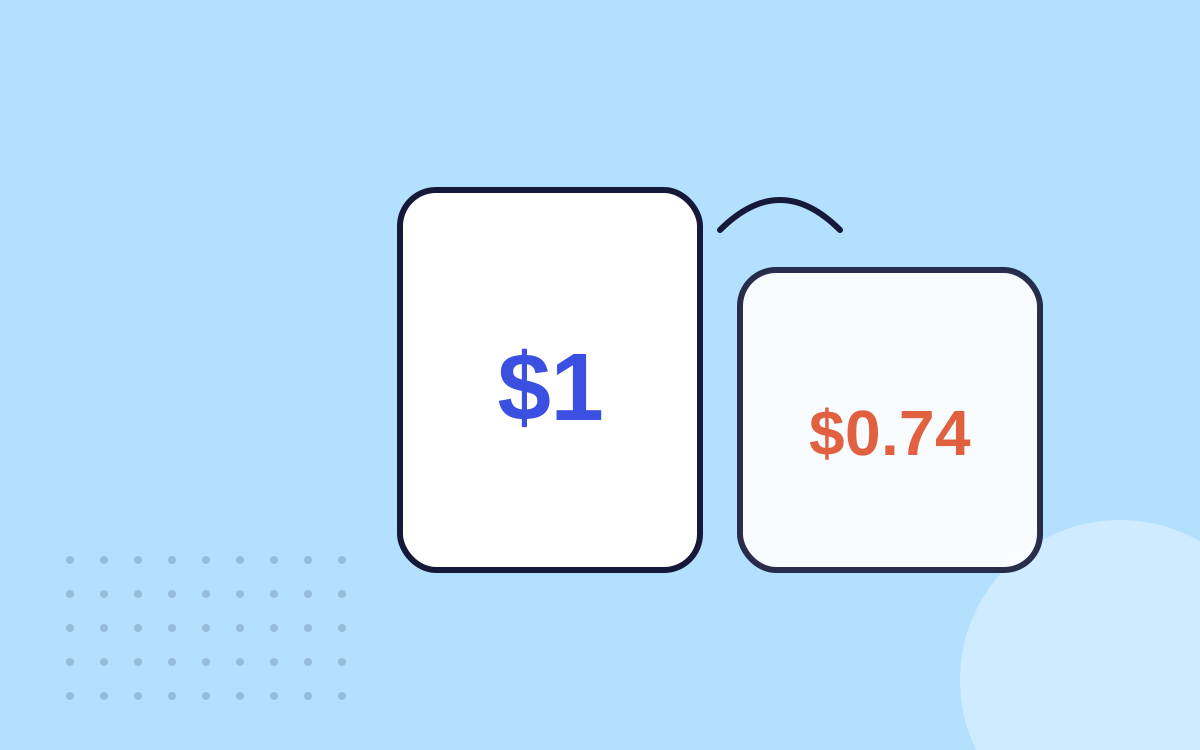
At 3% inflation, $1,000 left in cash buys about $744 worth of today's goods after 10 years, and about $412 after 30. That's why long-term money usually needs to be invested, while short-term money (like an emergency fund) stays in cash for safety.
Nominal vs. real returns
A nominal return is the number you see on a statement. A real return is what's left after inflation. The exact formula is (1 + nominal) ÷ (1 + inflation) − 1.
| Nominal | Inflation | Real | |
|---|---|---|---|
| Diversified investments (example) | 7% | 3% | 3.88% |
| Savings account (example) | 2% | 3% | -0.97% |
After 20 years, the nominal balance is $40,387, but in today's money it buys what $21,716 buys now. Plans that ignore inflation look better on paper than they will feel in real life.
Where it fits in your plan
- Budget: revisit your numbers once a year; prices for needs drift up.
- Emergency fund: raise the target when your essential costs rise.
- Long-term goals: plan with real returns. The Pipwise FIRE calculator already uses a real (after-inflation) return.
- Pay: a raise below inflation is a pay cut in real terms. It's a useful fact to bring to a salary conversation.
Assumptions: constant yearly inflation and returns for illustration only. Actual inflation and returns change every year.
Sources
This article is general education, not personal financial advice. Figures in worked examples are calculated from the assumptions stated with them and are not forecasts.
Get the next guide by email
One short email a week, plus the free Money Map workbook.