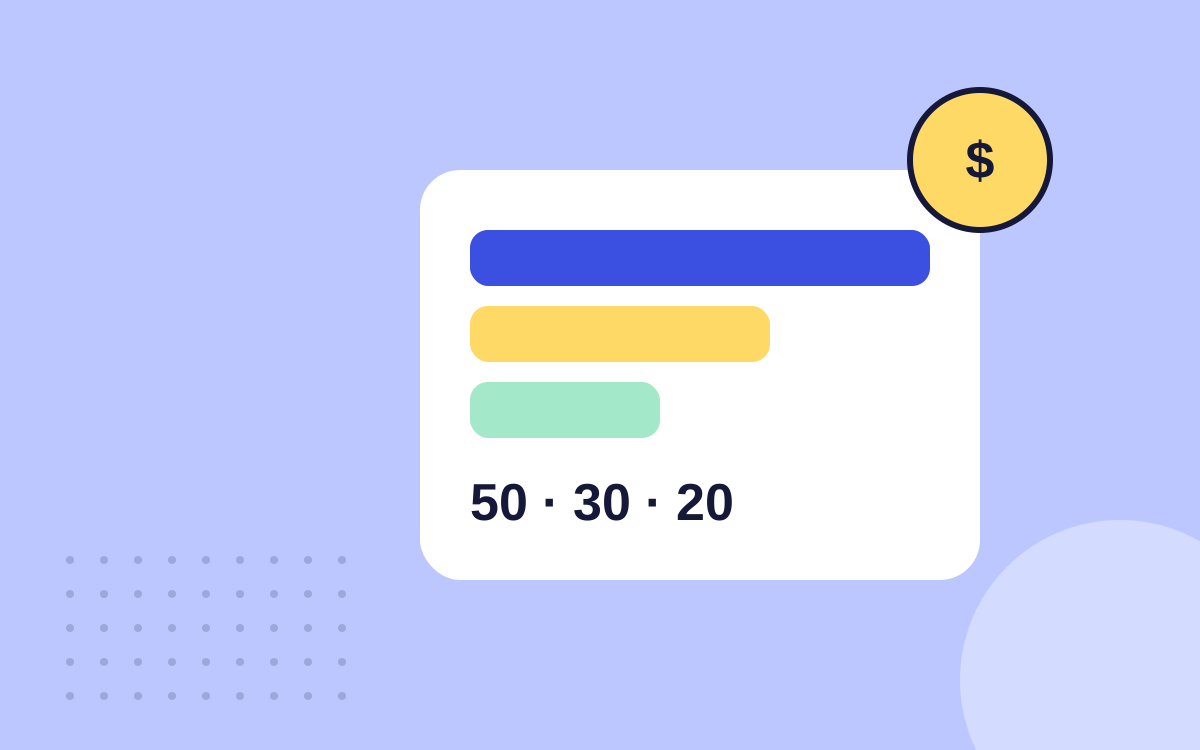
The 50/30/20 rule is the most quoted budget there is: half of your take-home pay for needs, 30% for wants, 20% for savings and extra debt payments. It's a good starting point. It also breaks the moment rent alone eats half your paycheck, which is normal in a lot of cities.
This guide shows how to keep the idea of the rule while changing the numbers so they fit your real life.
What the rule actually says
The split was popularized by Elizabeth Warren and Amelia Warren Tyagi in their 2005 book All Your Worth. Three buckets, based on take-home pay (what lands in your account after tax):
- Needs (50%): things you must pay to live and work. Housing, utilities, groceries, transport, insurance and the minimum payments on any debt.
- Wants (30%): everything you could cut without real harm. Eating out, streaming, travel, upgrades.
- Savings (20%): your emergency fund, investing, and any debt payments above the minimum.
The value of the rule isn't the exact percentages. It's that it forces you to decide what each part of your paycheck is for before the month starts.
A worked example: when needs take 75%
Take someone with $3,200 of take-home pay a month. Here are their fixed needs:
| Need | Per month |
|---|---|
| Rent | $1,500 |
| Utilities and phone | $180 |
| Groceries | $420 |
| Transport | $160 |
| Insurance and minimum debt payments | $140 |
| Total needs | $2,400 |
Rent alone is 47% of take-home pay. All needs together are $2,400, or 75%. Under a strict 50/30/20 split, needs get $1,600, which is $800 short every month.
The tempting fix is to quietly borrow from the savings bucket. That's how a budget turns into a wish list. A better fix is to pick a split that matches reality and then work on moving it back over time.
Two splits that fit high-rent months
| Split | Needs | Wants | Savings |
|---|---|---|---|
| 50/30/20 | $1,600 | $960 | $640 |
| 60/20/20 | $1,920 | $640 | $640 |
| 70/20/10 | $2,240 | $640 | $320 |
60/20/20 is the first one to try. It accepts that needs cost more and takes the difference from wants, not from savings. In the example, needs still run $480 over the 60% line, so it would take a small cut in a needs line (a cheaper phone plan, a grocery list) or a slightly smaller wants budget to close the gap.
70/20/10 is a temporary setting for a hard stretch: a move, a new city, the first year after school. It protects the habit of saving even if the amount is small. Put a date on it, for example "until my next pay rise", so it doesn't become permanent by accident.
How to move the split back over time
- Send raises to savings first. When your pay goes up, move at least half the increase into the savings bucket before lifestyle catches up.
- Review the three biggest needs once a year. Housing, transport and insurance usually decide the whole budget. A cheaper insurance quote or a different commute can be worth more than a year of skipped coffees.
- Label minimum debt payments as needs. Anything above the minimum goes in savings. That keeps the picture honest.
- Check the actual split every month. Ten minutes with your bank app is enough. Compare what happened with what you planned.
The short version
- Use 50/30/20 as a map, not a test you pass or fail.
- If needs are above 50%, try 60/20/20 before touching savings.
- Use 70/20/10 only for a dated, temporary stretch.
- Move the split back with each raise.
Assumptions: take-home pay of $3,200 a month and the needs listed above. Your numbers will differ; the Pipwise paycheck calculator on the homepage runs the same split on your own pay.
Sources
- Elizabeth Warren and Amelia Warren Tyagi, All Your Worth: The Ultimate Lifetime Money Plan (Free Press, 2005), the book that popularized the 50/30/20 split.
This article is general education, not personal financial advice. Figures in worked examples are calculated from the assumptions stated with them and are not forecasts.
Get the next guide by email
One short email a week, plus the free Money Map workbook.